Analytics
Description
The Analytics asset is an optional feature extraction and object identification layer that can be appended on top of L1B imagery. It transforms Earth Observation imagery into actionable, machine-readable intelligence, enabling customers to automatically detect, classify, and understand activity at specific locations.
Powered by artificial intelligence modules, the Analytics layer systematically extracts structural insights across three primary operational domains:
- Land Equipment
- Vessels
- Aircraft
The output of these analyses is delivered as independent GeoJSON FeatureCollection files. Each file contains precise polygon geometries representing the detected objects, along with metadata attributes such as granular classifications, confidence scores, and physical bounding box dimensions (area, length, width, and orientation).
Note
If you are interested in enabling Analytics, please contact your account manager.
Spatial Data Collection Schema
Each requested algorithm type generates an independent GeoJSON FeatureCollection containing polygon geometries representing detected objects. The naming convention is analytics_<algorithm_type>.geojson. The <algorithm_type> parameter specifies the distinct deep learning model or operational domain utilized for the detection (for example, land_equipment, vessels, or aircraft).
The top-level GeoJSON properties map pipeline metadata, while the features array maps individual vector assets:
{
  "type": "FeatureCollection",
  "properties": {
    "algoVersion": "string",
    "analysisLink": "string"
  },
  "features": [
    {
      "type": "Feature",
      "geometry": {
        "type": "Polygon",
        "coordinates": [[[longitude, latitude], ...]]
      },
      "properties": {
        "featureId": "string",
        "category": "string",
        "parentClass": "string",
        "class": "string",
        "confidence": float,
        "count": integer,
        "area": float,
        "longerSide": float,
        "shorterSide": float,
        "orientation": float
      }
    }
  ]
}
Feature Properties Reference
| Property Key | Type | Required | Description |
|---|---|---|---|
featureId |
String | Required | Unique identifier of the detection. |
category |
String | Required | High-level classification name. Matches exactly: "Vessels", "Aircraft", or "Land Equipment". |
parentClass |
String | Required | Mid-level tactical or behavioral archetype grouping (e.g., "fighter", "cargo-ship"). |
class |
String | Required | Granular target class value from the system ontology definitions (e.g., cars, trucks, armored-vehicles, logistic-storages, fast-moving-vehicles, railcars). |
confidence |
Float | Optional | Detection confidence score in the range [0.0, 1.0]. Not yet available for all classes. |
count |
Integer | Required | Number of objects contained within the polygon (defaults to 1). |
area |
Float | Required | Calculated spatial extent of the ground footprint in square meters (m²). |
longerSide |
Float | Required | Maximum bounding box length in meters. |
shorterSide |
Float | Required | Minimum bounding box width in meters. |
orientation |
Float | Required | Orientation angle in degrees. |
Top-Level Properties
| Property Key | Type | Description |
|---|---|---|
algoVersion |
String | Version of the algorithm used for processing. |
analysisLink |
String | Link to the associated analysis resource. |
Analytics Ontology Definitions
The platform operates across artificial intelligence models, featuring explicit structural classes and subtypes.
Land Equipment Module Classes
| Class | Description | Example |
|---|---|---|
cars |
All civilian and military cars, off-road vehicles, and other small vehicles. When objects are located in shadows or are parked closely in parking lots, identifying individual cars becomes difficult due to poor visibility of the boundaries between them. | 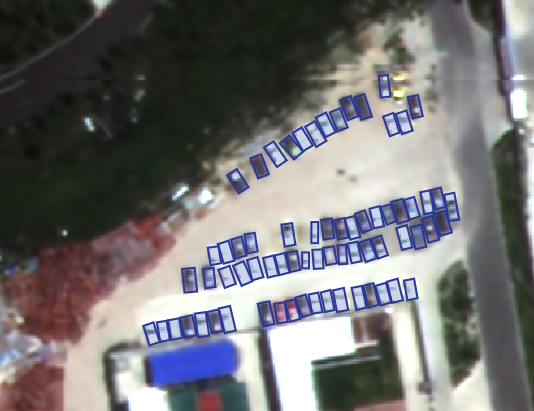 |
trucks |
Trucks typically appear as oval or rectangular oblong objects. In most cases, the cabin and the semi-trailer are distinguishable. This class also includes buses, military trucks, and trucks with various platforms. | 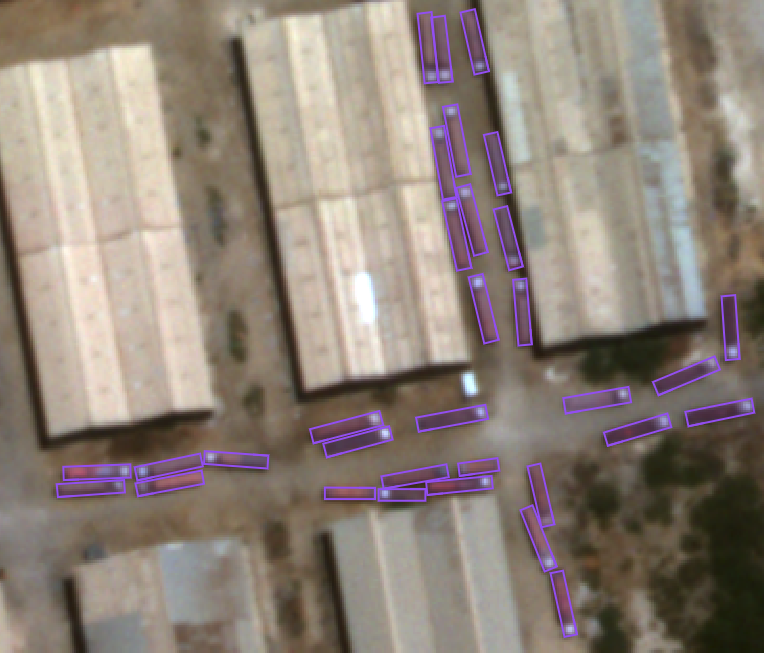 |
armored-vehicles |
This category contains vehicles such as tanks, infantry fighting vehicles (IFV), armored personnel carriers (APC), and mine-resistant ambush protected vehicle (MRAP). | 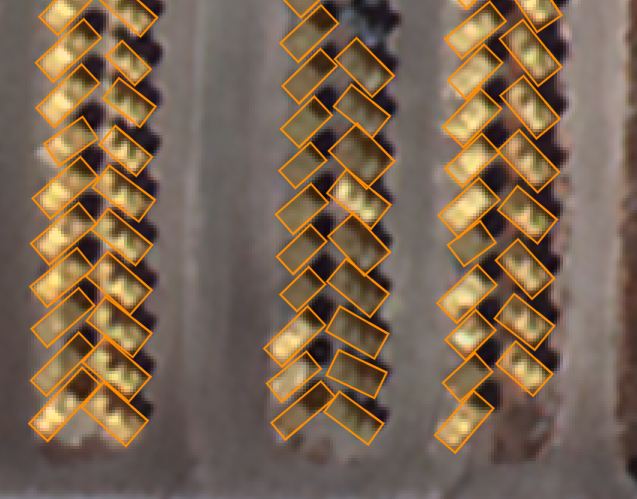 |
logistic-storages |
Temporary, elongated rectangular or oval logistic structures (such as single standing containers, semi-trailers, and military storage objects). Objects should range in size from a passenger car to a truck. Logistic storage facilities are primarily found in construction sites, industrial zones, warehouses, mines, or military areas. This class should not include permanent structures (huts, sheds, rooftops), items smaller than a car, or high-density container piles. | 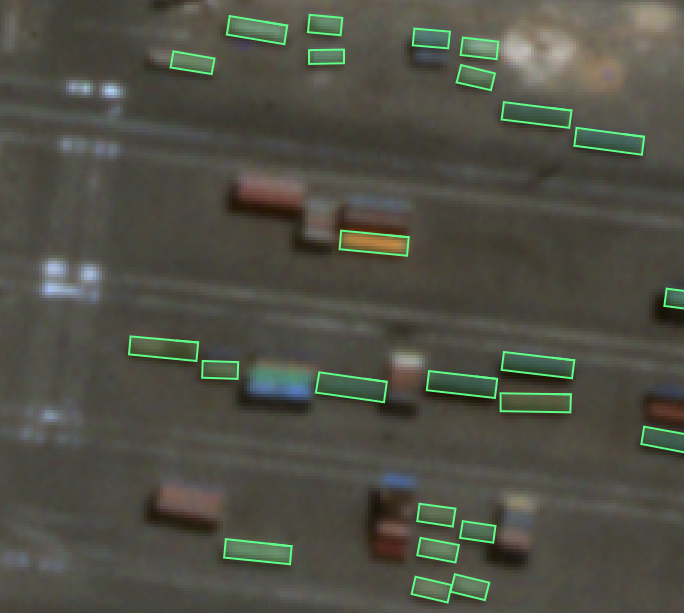 |
fast-moving-vehicles |
All vehicles with spectral bands misalignment. Bands misalignment occurs when the satellite captures a moving vehicle. Parts of the vehicle might appear in slightly different places in the image, creating a rainbow effect. | 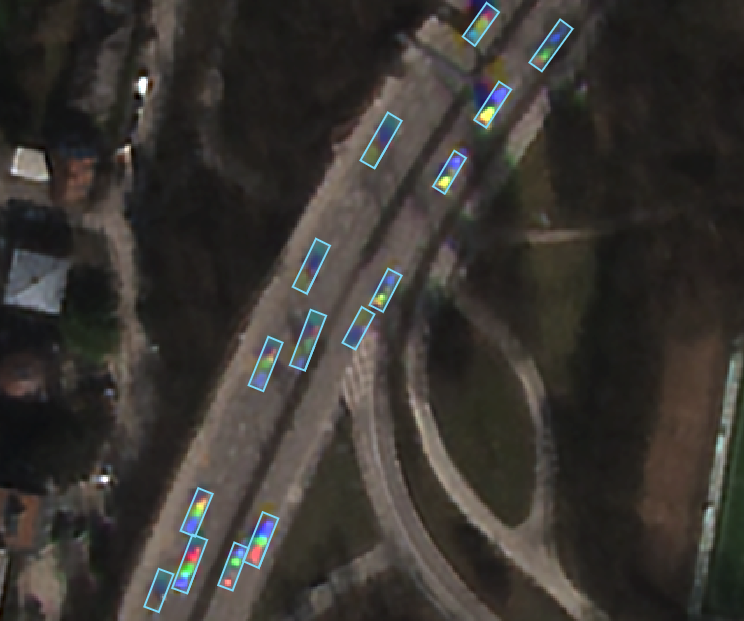 |
railcars |
The railcar class encompasses a wide variety of rolling stock, including passenger, cargo, flat, tank, hopper, and container railcars, as well as locomotives and those with rainbow artifacts. Typically characterized by an enclosed rectangular shape with solid walls and a slightly rounded roof, these objects vary in length. The objects might be confused with the truck class, depending on the specific imaged object and imaging conditions. | 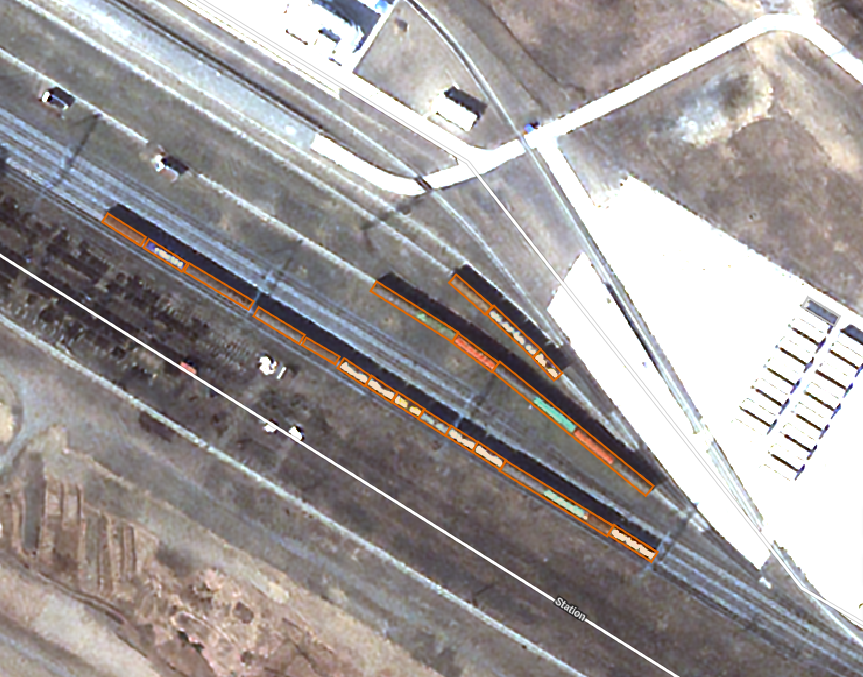 |
Vessels Module Classes
| Class | Description | Example |
|---|---|---|
aircraft-carrier |
Aircraft Carriers are usually the largest navy ships, and are capable of carrying military aircraft and helicopters. Currently, there are slightly over 50 active aircraft carriers worldwide operated by over a dozen navies. | 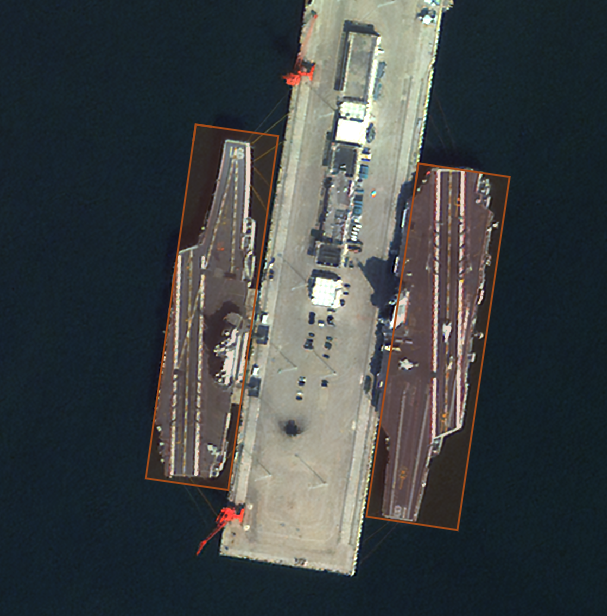 |
military-warships |
A warship is a naval ship built for naval warfare. This class consists of several different vessels (such as cruisers, destroyers, frigates, corvettes, and patrol ships). Despite varying sizes and roles—from small patrol vessels to cruisers—they share common features including weapon systems, advanced radar and sensors, and for some types also helipads. | 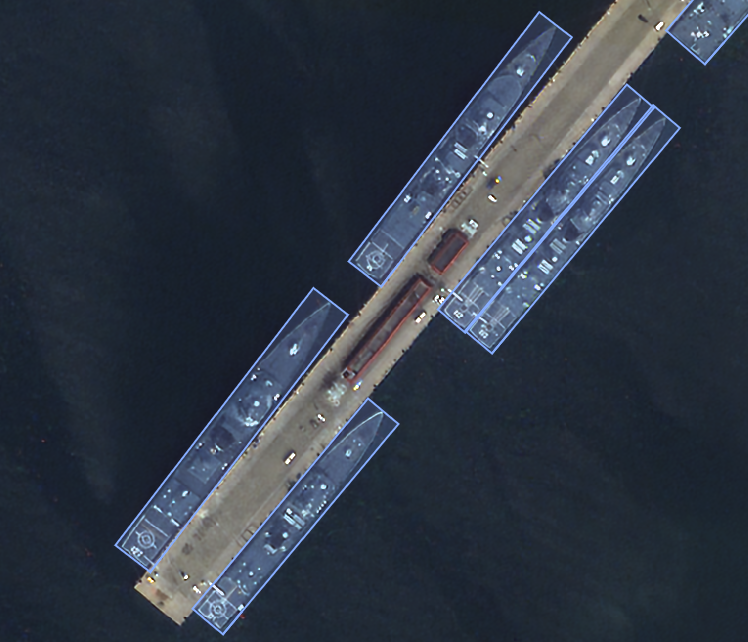 |
submarines |
Submarines are categorised by their ability to operate beneath the water's surface, typically featuring a cylindrical body with a vertical structure amidships that houses communications and sensing devices, as well as periscopes. While the length of submarines varies, the average size for large oceanic submarines is between 120 and 150 meters. | 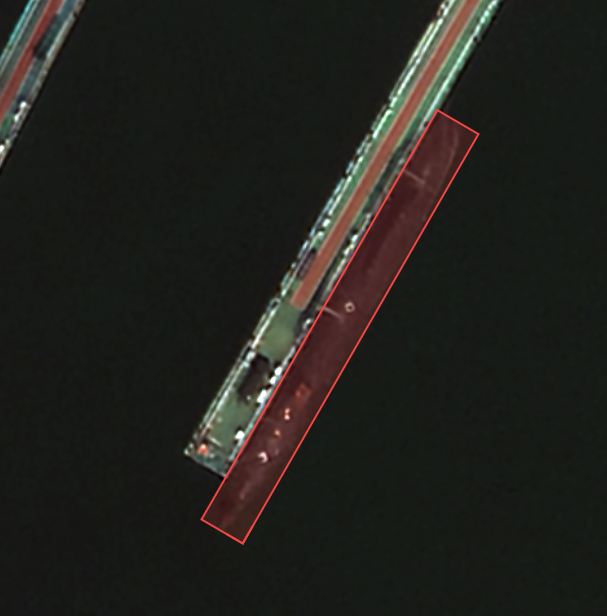 |
container-ships |
Large cargo vessels that carry their entire load in standardised truck-size intermodal containers (visible as stacked rectangular boxes). | 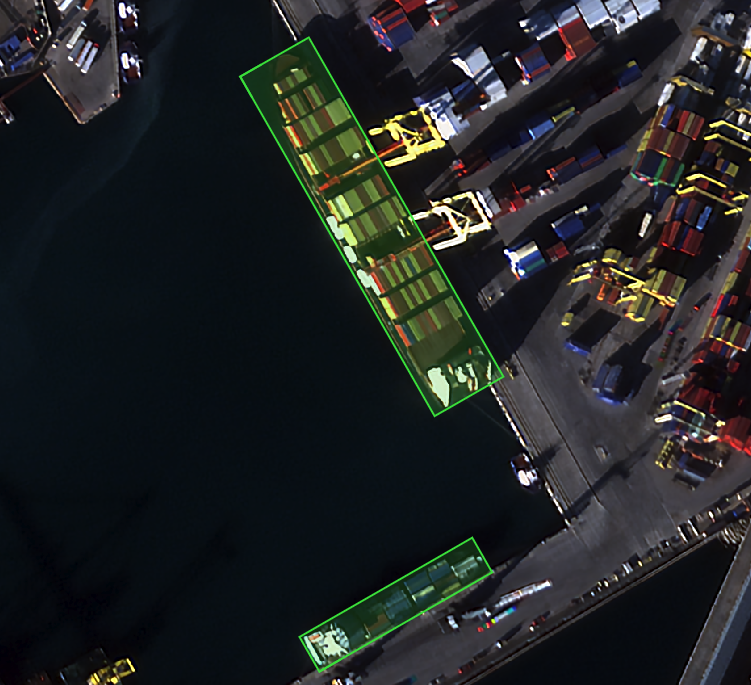 |
tanker-ships |
Ships designed to transport or store liquids or gases in bulk, often identifiable by piping and infrastructure on their decks. Misclassification as cargo ships may occur due to similarities, depending on specific imaging conditions. | 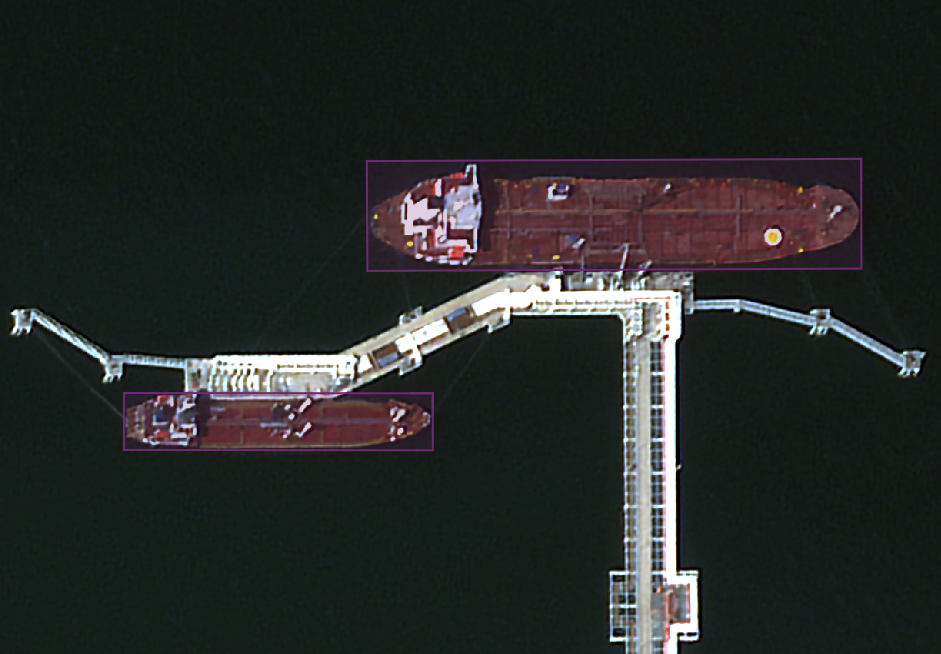 |
cargo-barges-lng-carriers |
Cargo barges, LNG carriers. This class includes large cargo vessels that carry bulk cargo (coal, sand, maize…) below the deck level, any oversized cargo on the deck level (besides standardised containers) and auxiliary military ships (ships specifically designed to operate in support of combatant ships, e.g., replenishment, transport, or repair). Because of the similarities, this class also includes barges, which are large flat-bottomed boats built for transporting heavy goods along rivers, canals, or coastal routes. Additionally, LNG carrier vessels are also part of this class—specialised tanker ships heavily insulated and designed to transport Liquefied Natural Gas, often with distinctive spherical or membrane tanks. | 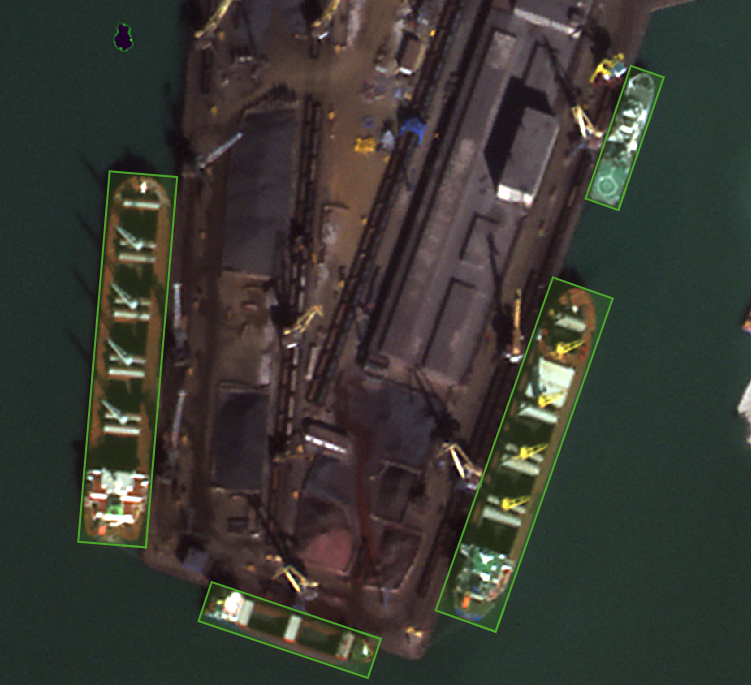 |
passenger-cruise-ships |
Large passenger ships used mainly for vacationing, recognisable by their massive, multi-story white superstructures and leisure amenities on deck. | 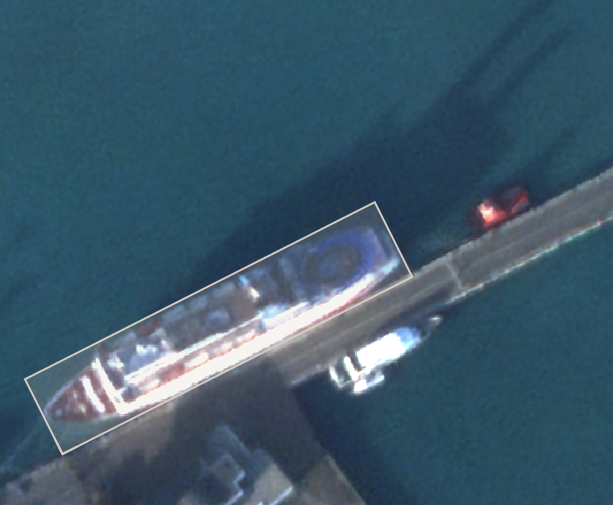 |
tugboats |
A tugboat is a small boat used to push or pull barges or to help manoeuvre larger vessels. Usually, the tugboat outline is made of rubber (black) and can be found within the larger ports. | 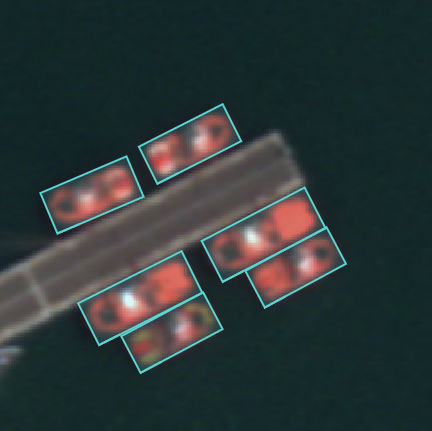 |
commercial-fishing-boats |
Various boats and ships used for commercial fishing, often identifiable by nets, cranes, or specific aft-deck layouts. Detecting this class proves difficult because of its varying sizes and the lack of standardisation in its deck gear. | 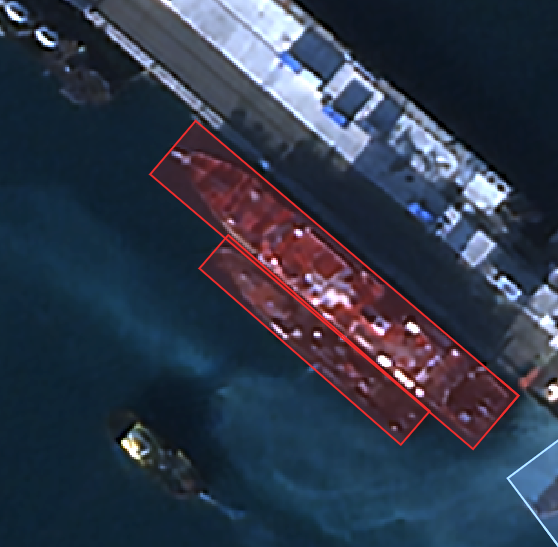 |
maritime-other-ships |
This class covers small vessels such as houseboats, yachts, sailing boats, motorboats, small catamarans, and small fishing boats. These vessels are commonly located within civilian harbors in large groups, a factor that complicates the identification of individual ships. |  |
maritime-other-objects |
This class covers other floating objects such as harbour work craft, offshore oil rigs, platforms, pipelaying vessels, and other floating objects that are not ships. These objects are distinguished by the fact that they do not possess a standard vessel silhouette. | 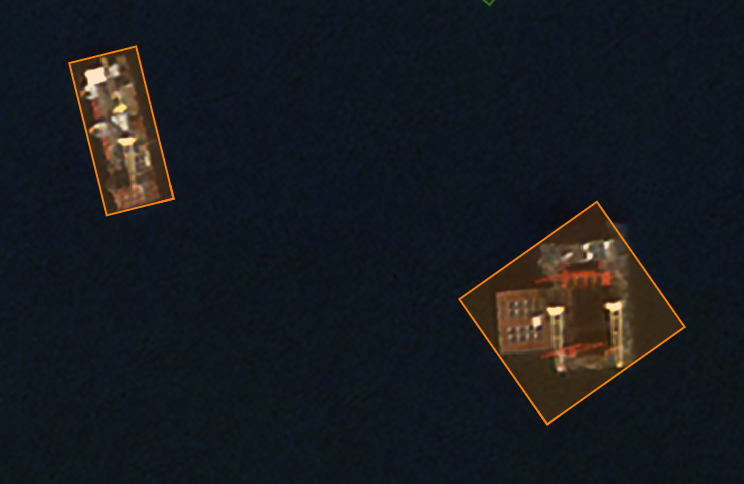 |
Aircraft Module Classes
Fighters
| Class | Description | Example |
|---|---|---|
l-39 |
Single-engine aircraft with a sleek, long pointed nose, tandem bubble canopy, and permanent, non-jettisonable wingtip fuel tanks. | 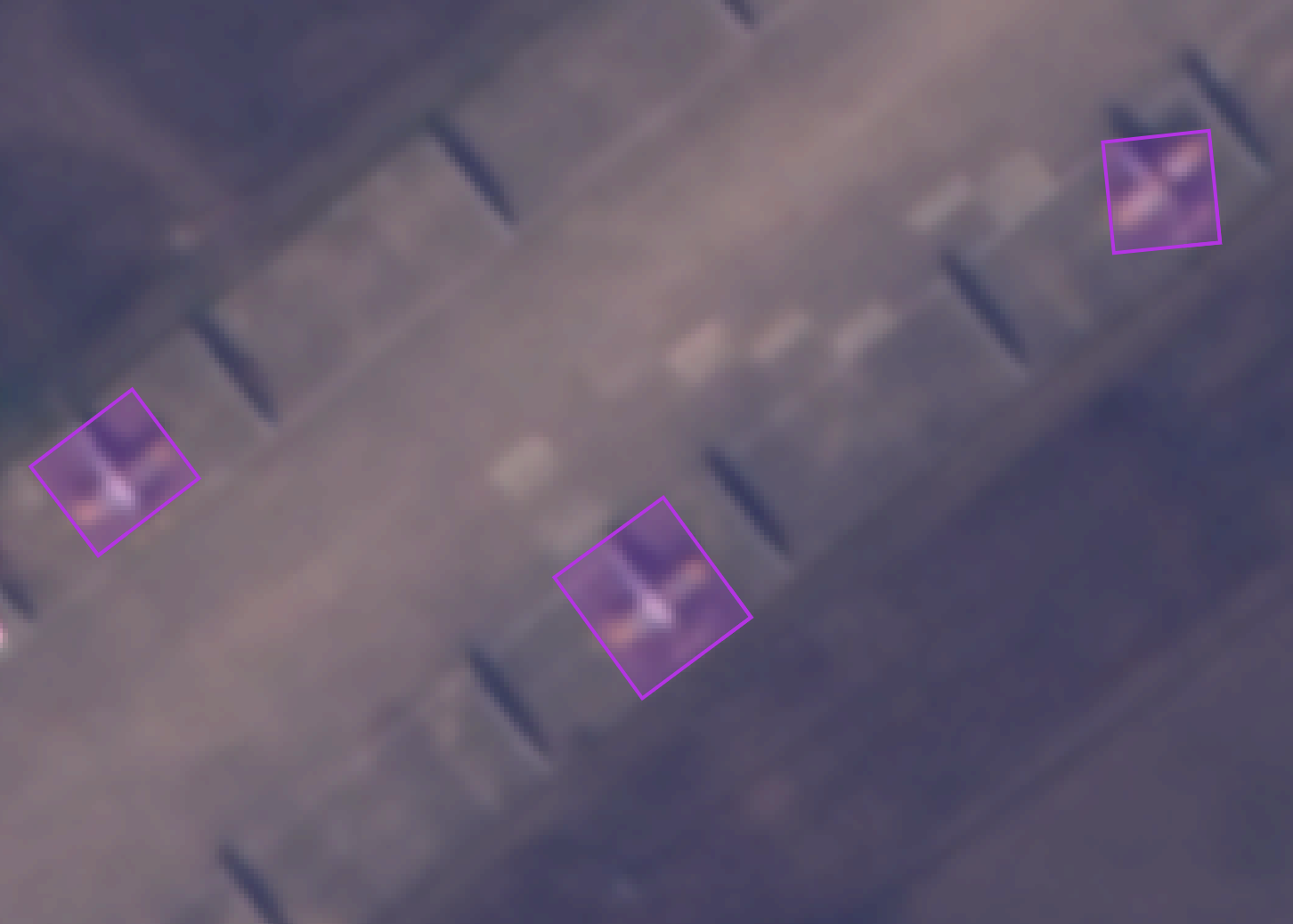 |
chengdu-j-7-f-7_mig-21 |
Chengdu J-7/F-7, MiG-21. Single-engine aircraft with a needle-nose air intake cone, a prominent dorsal spine, and a clipped-delta wing configuration. | 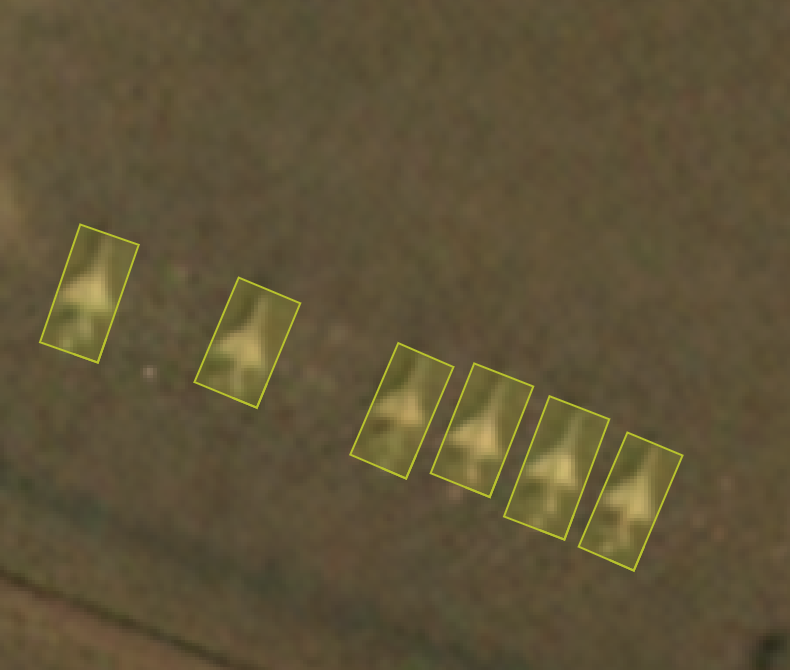 |
mig-23-27 |
Single-engine aircraft distinguished by its variable-geometry wings, which can be positioned differently during various flight phases and on the ground. MiG-27 is based on the MiG-23 and optimized for ground attack missions (MiG-27s had been retired, marking the end of service for this model). | 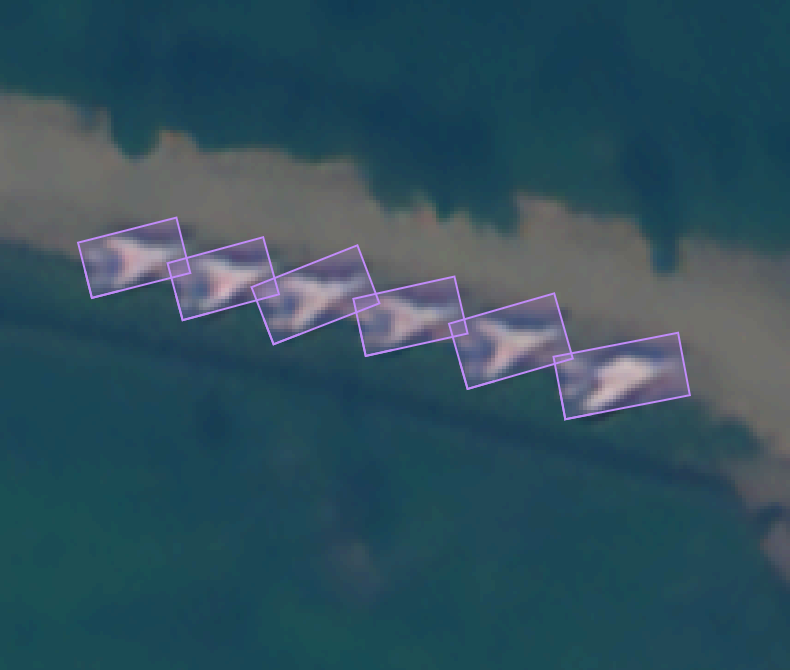 |
mig-25-31 |
Two-engine aircraft distinguished by its double vertical stabilizer, two massive engines, and massive air inlets. | 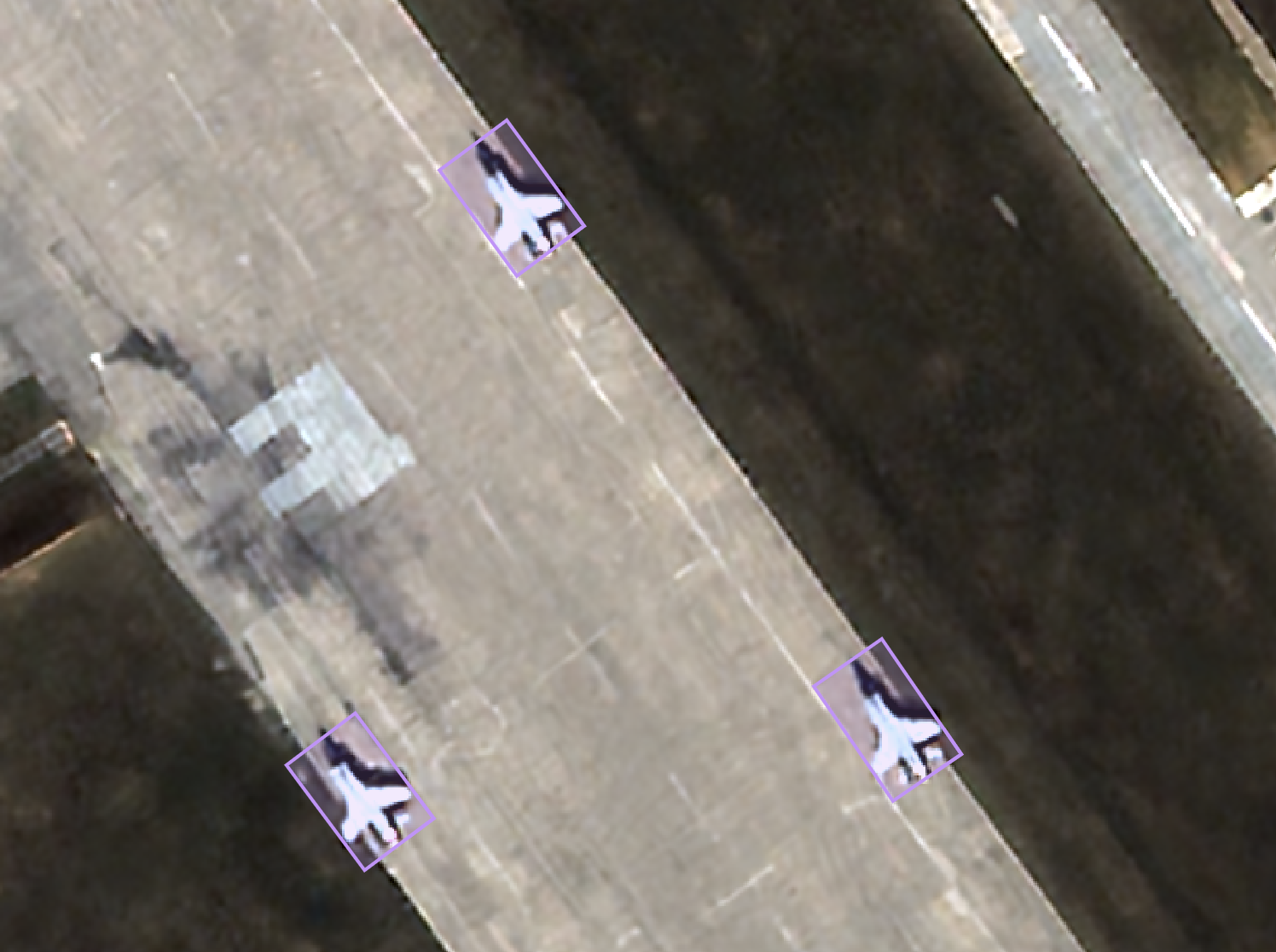 |
mig-29 |
Two-engine fighter aircraft characterized by its massive two-engine airframe and large horizontal and vertical stabilizers. | 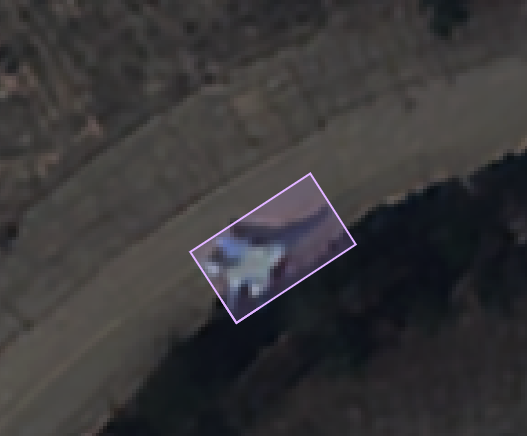 |
shenyang-j-11-15-16_su-27-30-33-34-35 |
Shenyang J-11/15/16, Su-27/30/33/34/35. Two-engine fighter aircraft with a long radar stinger in the rear, canards on some variants, and rails on the edges of the wings. | 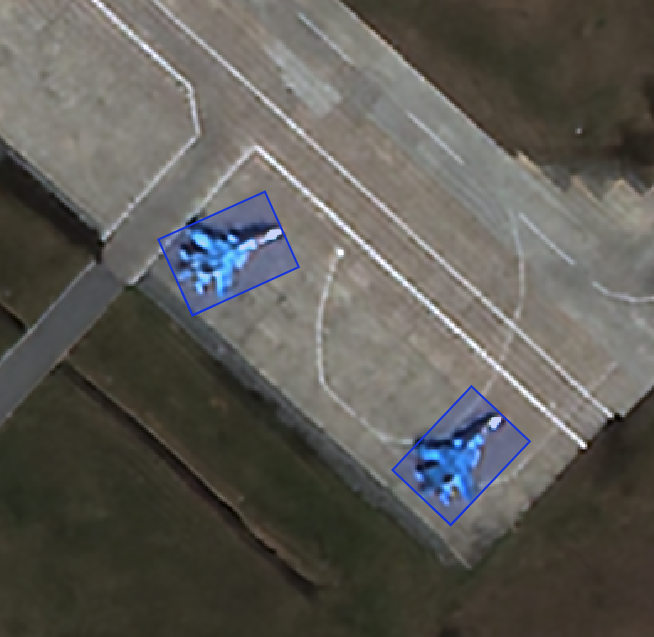 |
su-24 |
Two-engine aircraft distinguished by its variable-sweep wings design, which allows the wings to be positioned differently. | 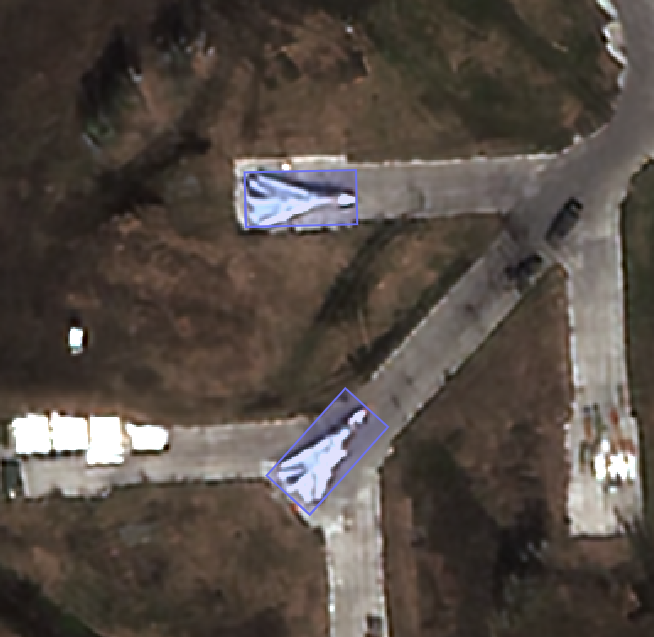 |
su-25 |
Two-engine aircraft distinguished by its nose, which is fitted with distinctive twin pitot probes and hinges up for service access. | 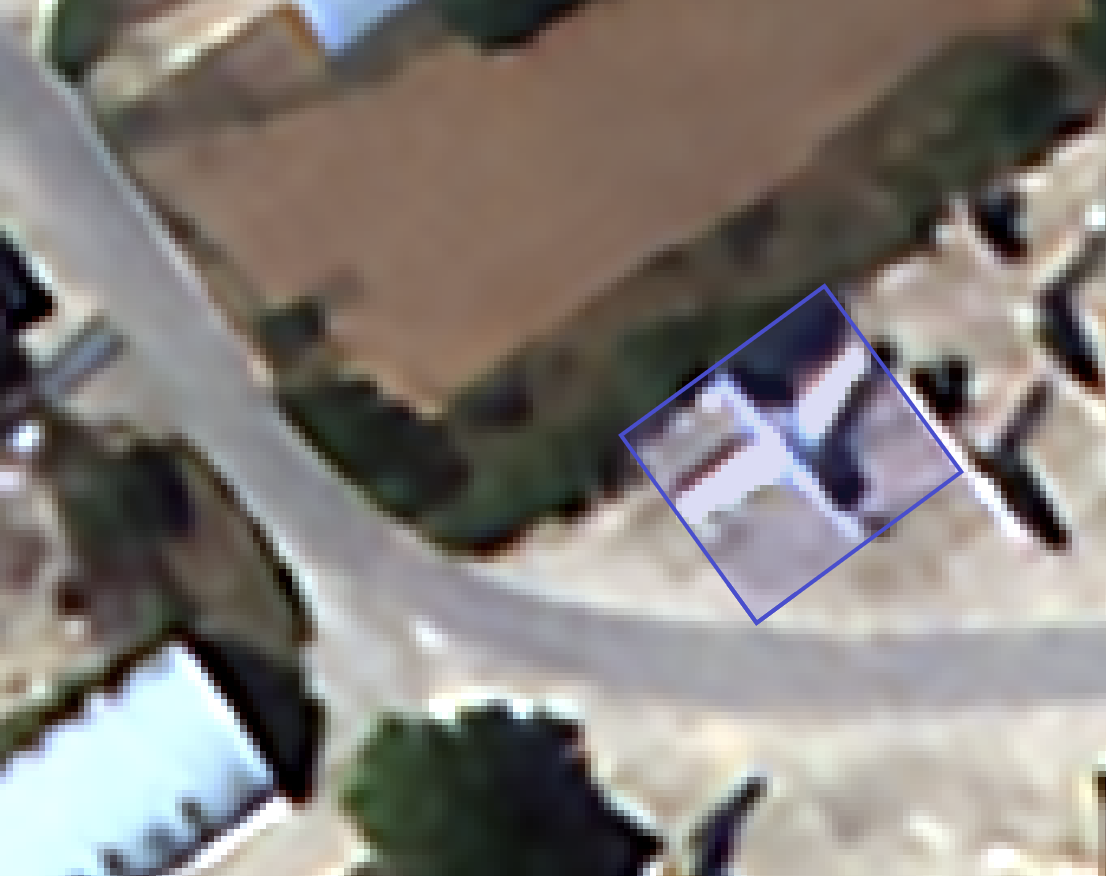 |
fighter-other |
Fighter aircraft not belonging to the above-described classes. | — |
Bombers
| Class | Description | Example |
|---|---|---|
tu-22 |
Bomber aircraft powered by two engines, distinguished by its variable-sweep wing, long and slim airframe, and light-gray camouflage. | 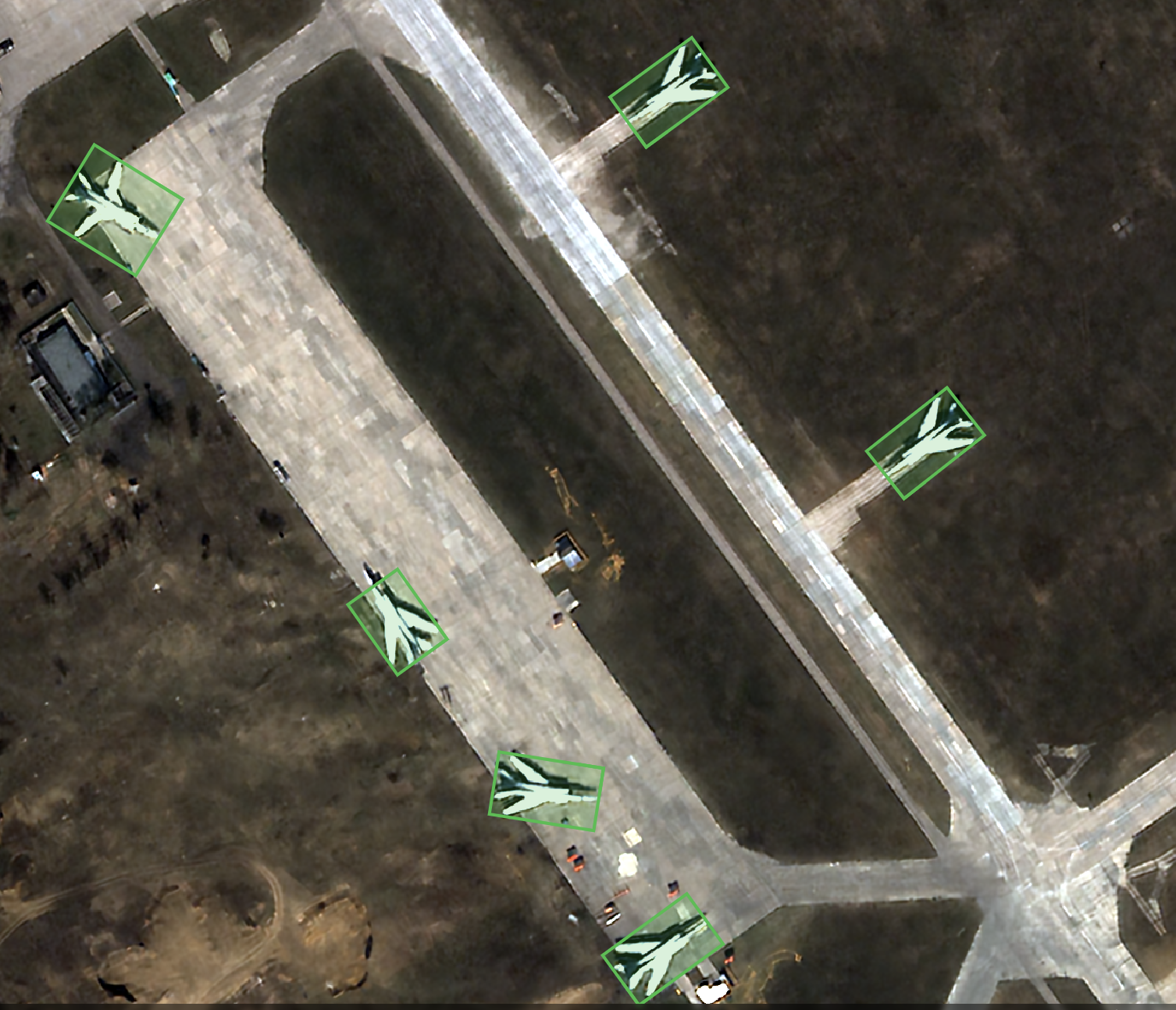 |
Transport Military Aircraft
| Class | Description | Example |
|---|---|---|
an-12_kj-500_y-8_y-9 |
An-12, KJ-500, Y-8, Y-9. Four turboprop engines, diagonal leading edge and straight trailing edge of wings, characteristic hump in the rear of the airframe in front of the vertical stabilizer. KJ-500 variant is further identified by a radar dome on top. | 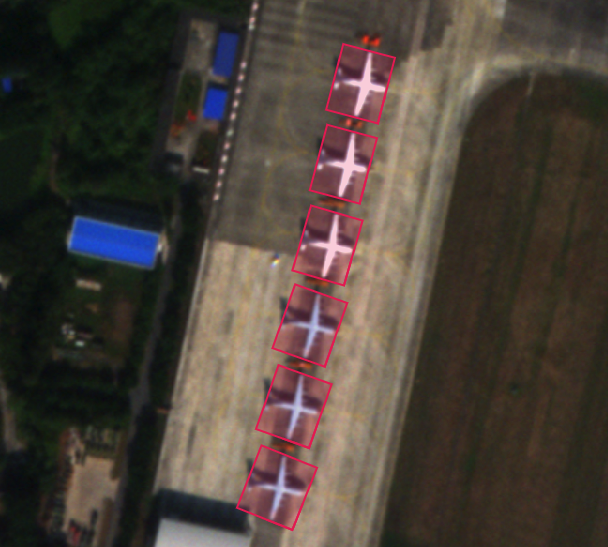 |
an-24-26_y-7 |
An-24/26, Xian Y-7. Two-engine aircraft, known by the codename "Coke," with variants including the An-26 ("Curl"), An-30, An-32 ("Cline"), and the Chinese version Xian Y-7. Characterized by its two turboprop engines. | 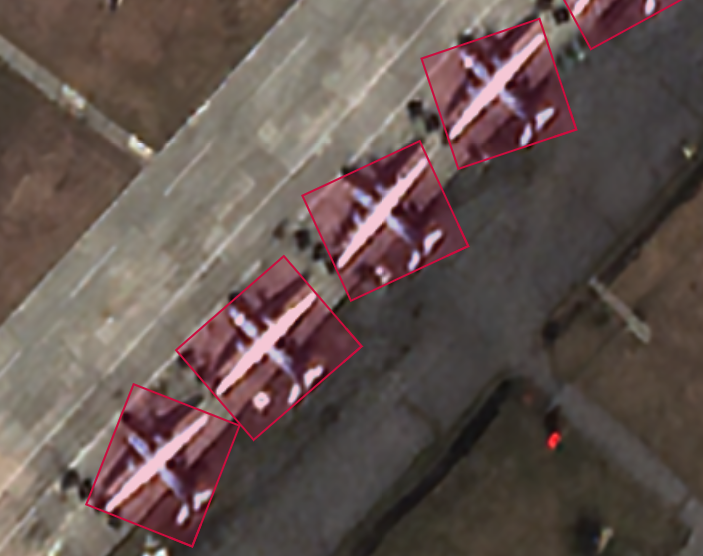 |
an-72-74 |
Two engines with a very specific placement resembling "oversized ears." | 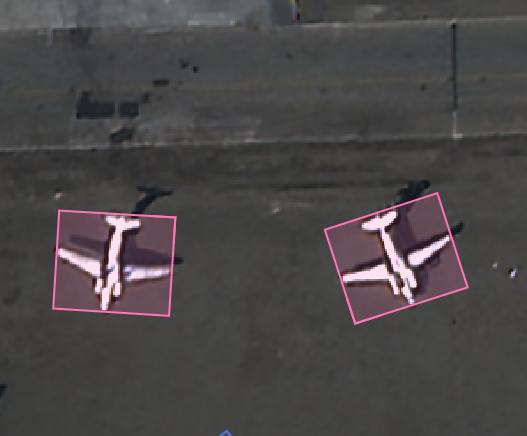 |
a-50_il-76-78_kj-2000 |
A-50, Il-76/78, KJ-2000. Massive airframe powered by four jet engines. Distinctive elements include large flaps on the trailing edges of the wings with a characteristic break, and horizontal stabilizers located at the top of the vertical stabilizer. AEW variant is further identified by a round radar dome on top. | 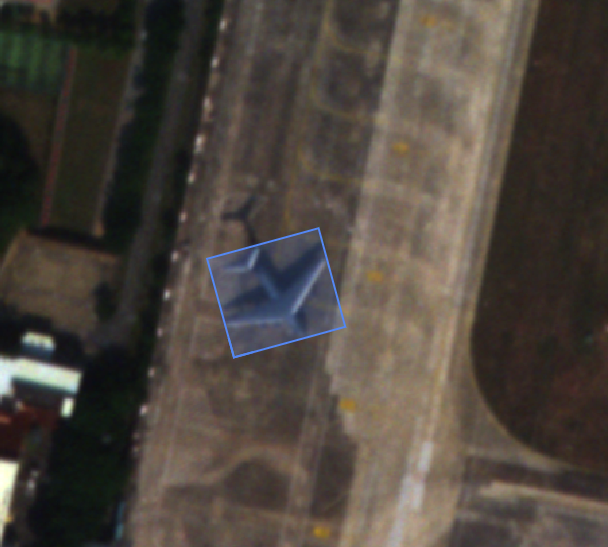 |
il-38 |
Four turboprop engines with a significant convex shape of the propellers on wings. | 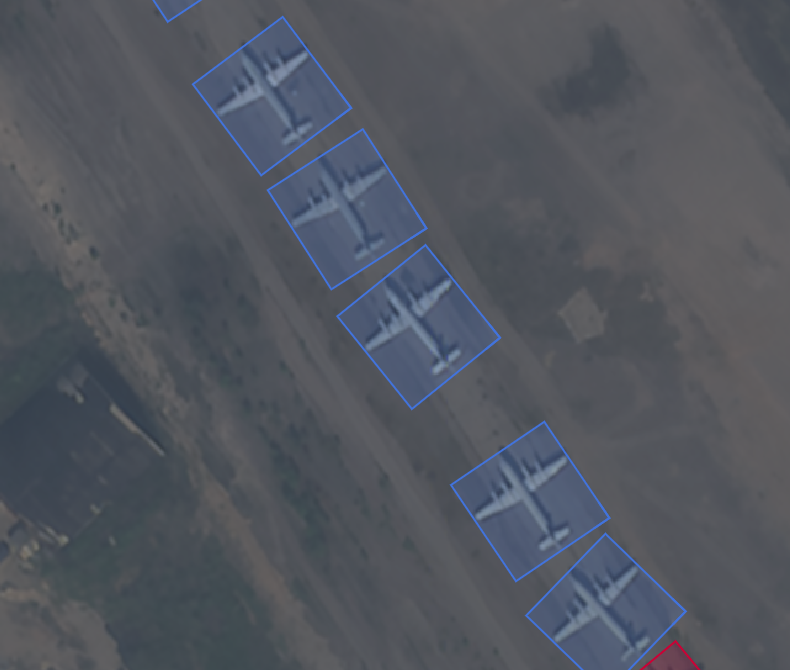 |
c-130 |
Four turboprop engines, straight leading edge, and diagonal trailing edge on wings. | 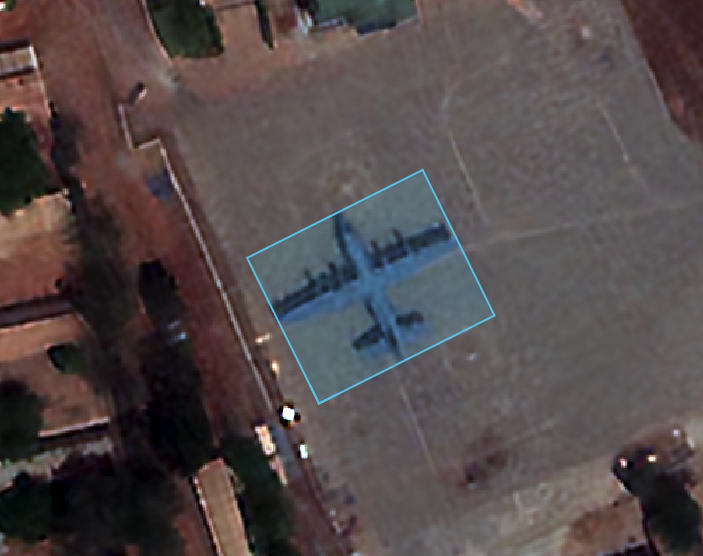 |
Other Aircraft Classes
| Class | Description | Example |
|---|---|---|
transport-small |
Small aircraft with straight wings (gliders, trainer aircraft, light sport aircraft, etc.). | 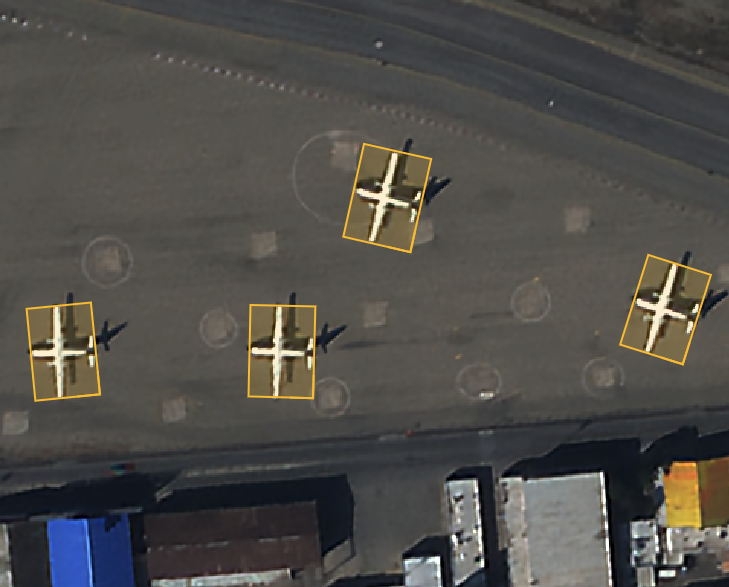 |
transport-large |
Bigger (both narrowbody and widebody) airplanes such as commercial airliners and cargo aircraft with visible jet engines (most commonly 2 or 4 engines) on the wings and swept-wings. | 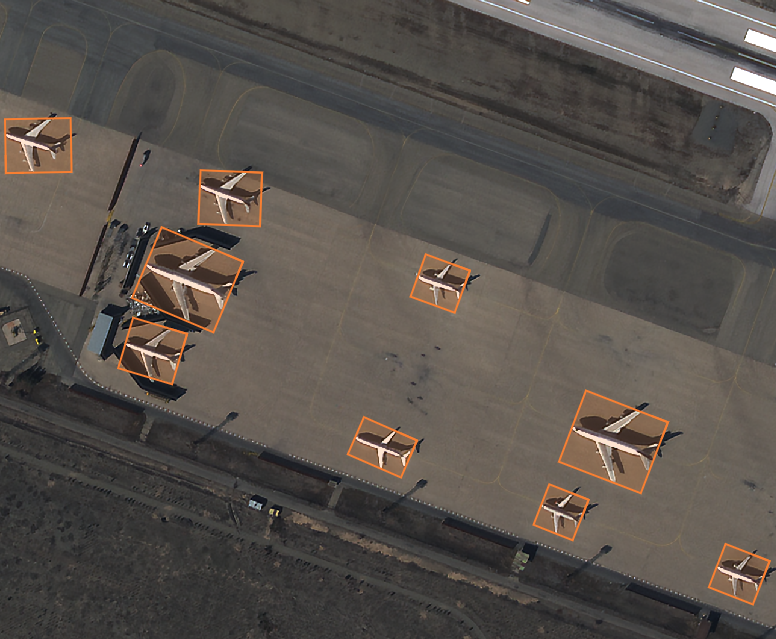 |
civil-business-jet |
Jet aircraft designed for transporting small groups of people, with jet engines located in the back-end under the horizontal stabilizers. | 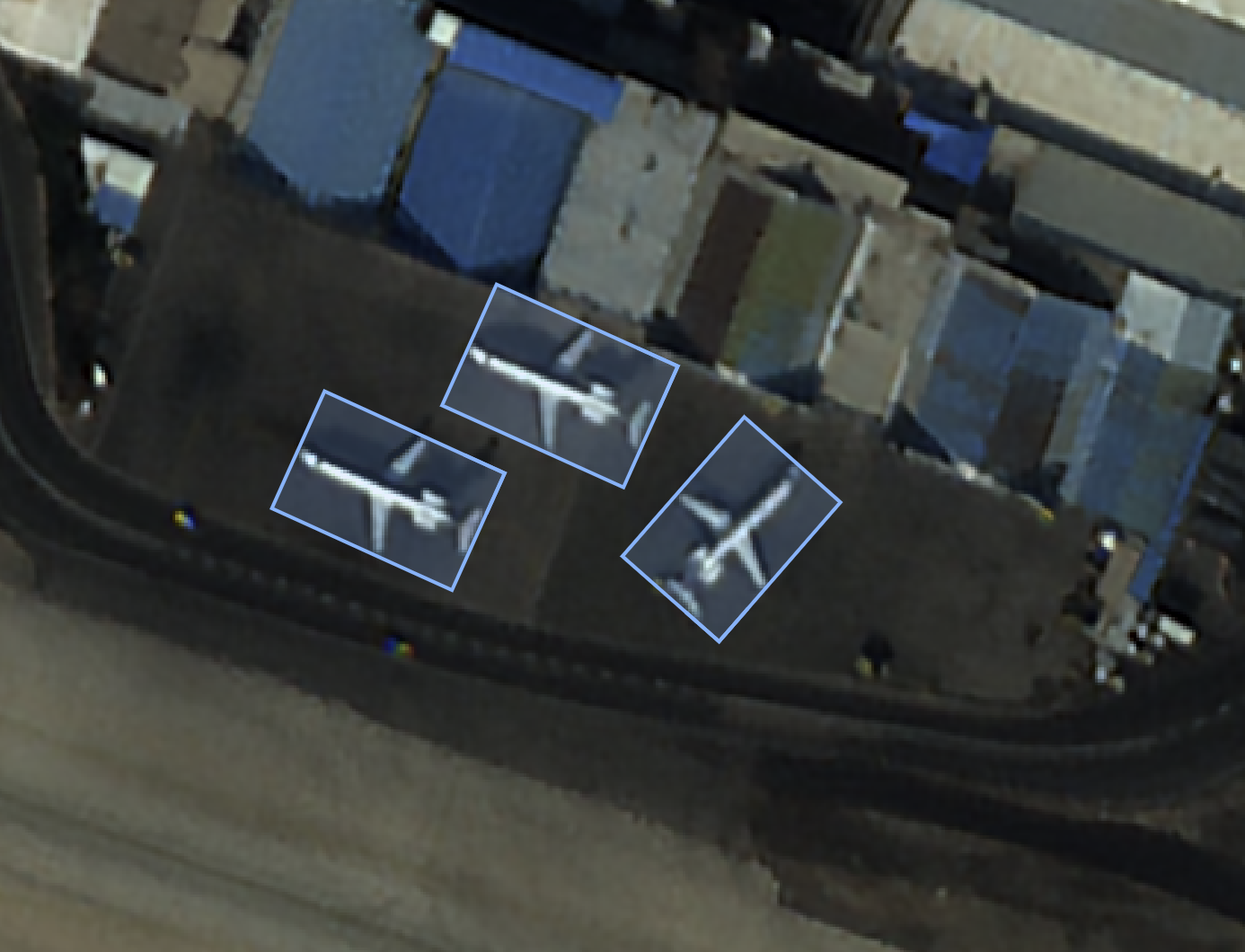 |
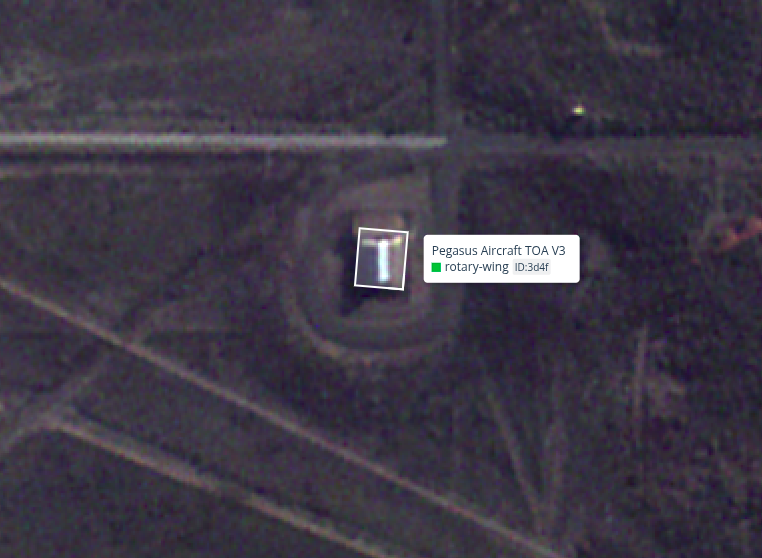
rotary-wing |
Attack, multipurpose and transport rotary-wing aircraft. | 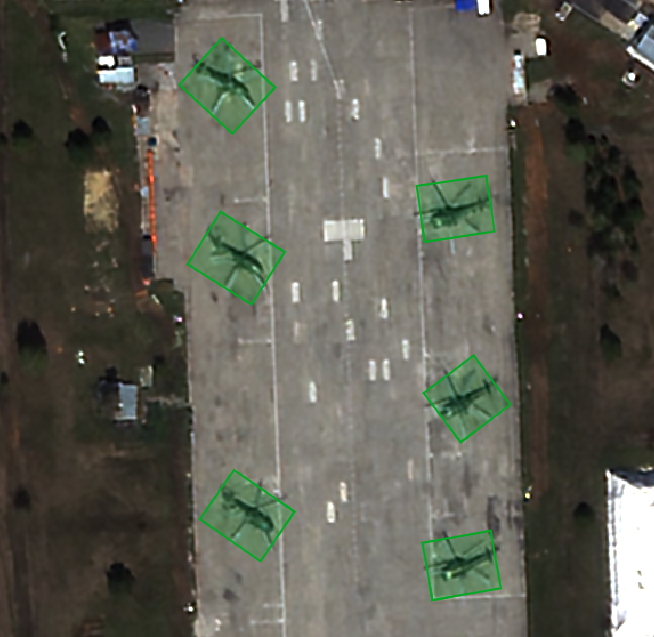 |
rpas |
Remotely Piloted Aerial Systems (RPAS), classified by performance into categories such as Medium Altitude Long Endurance (MALE) and High Altitude Long Endurance (HALE). Physical attributes defined by various wing designs including straight-wing, swept-wing, and delta-wing configurations. | — |
Known Issues & Algorithmic Limitations
Target Cluster Merging — When high volumes of similar targets park in tight configurations (such as cargo trucks in commercial logistics fields, or multiple support ships moored side-by-side at a pier), the model can drop edge delineation lines. When this happens, fewer objects are counted individually, yielding a drop in Recall.
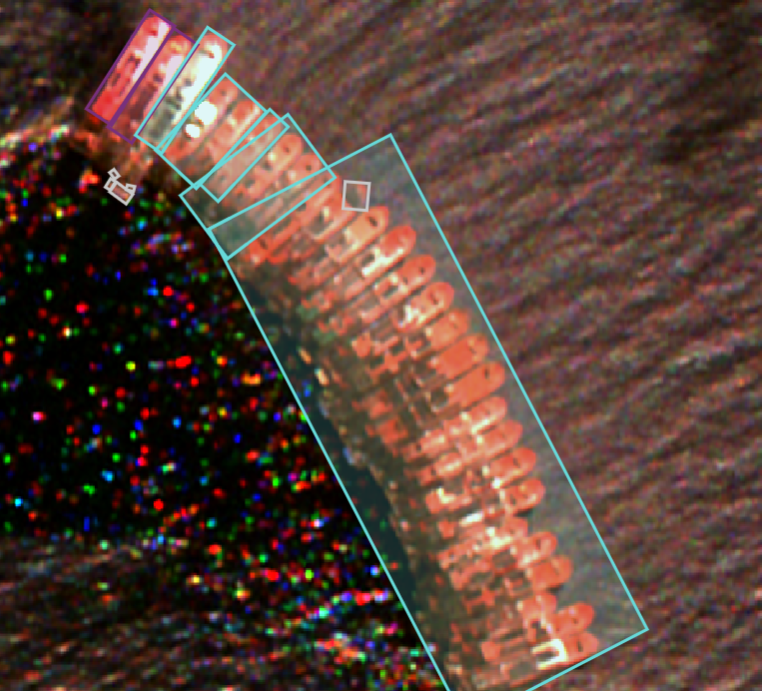
Large Target Splitting — High structural contrast variations along internal zones of large merchant vessels (such as distinct color blocks or deck machinery sections on massive container ships) can cause segmentation models to fracture the entity profile into separate small bounding boxes.

Environmental False Positives — High-frequency maritime surface scattering anomalies, including sun glint reflection arcs, crashing coastal surf zones, or breaking sea whitecap wave fields, can replicate structural aspects of target shapes, causing false positives within open ocean search areas.
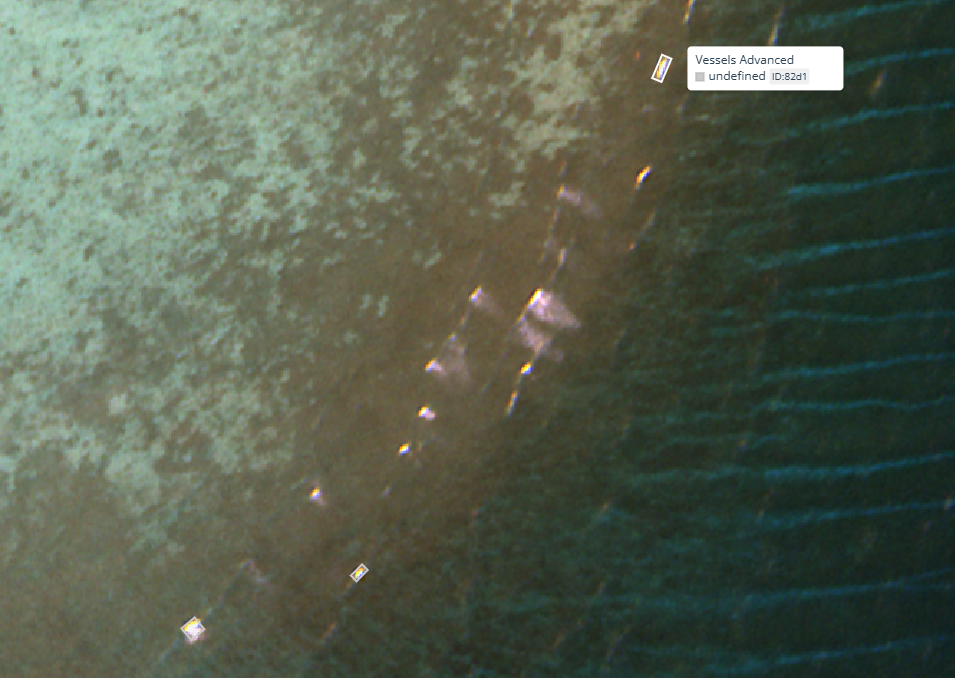
Shape-Based Class Confusion — Objects displaying highly similar linear profiles often trigger class validation errors on lower-resolution imagery collections. For example, open railcars can be misclassified as commercial road trucks due to shared rectangular parameters. Similarly, commercial liquid tanker hulls frequently trigger classification errors as generic bulk cargo hulls.
Changelog
| Version | Release date | Change log |
|---|---|---|
| 1.0.0 | 2026-05-25 | Initial release. |
Imagery End User Rights Agreement and Terms of Use
All imagery products are delivered under Satellogic Imagery End User License Agreement. The terms and conditions of the agreement are available to customers and accessible online on the website under License Agreement.